- Last Update22-Oct-2026


- Tweet
-
Black Sea attacks raise stakes in Bulgaria presidential vote
AFP
SOFIA — Bulgarians head to the polls Sunday in a presidential election overshadowed by security fears after a string of drone attacks on merchant ships in the Black Sea, seen as fallout from the war in Ukraine.
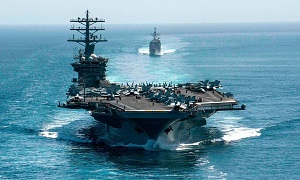
Four vessels were struck off Bulgaria's coast this month in the latest suspected spillover from Russia's 2022 invasion of Ukraine, bringing the conflict closer to the EU and NATO member state.
While Prime Minister Rumen Radev says the attacks appear to serve Russian interests, his government insists there is so far no evidence directly linking Moscow to them.
Incumbent President Iliana Iotova, a Radev ally who favours dialogue with Moscow, is the frontrunner for the largely ceremonial post, polls show.
Her main challenger is expected to be Andrey Gyurov, a banker and former caretaker prime minister backed by the pro-Western opposition.
Historically close to Russia, Bulgaria remains deeply divided over its relationship with Moscow.
So the election will pit two competing visions of Bulgaria against each other, said political scientist Parvan Simeonov, founder of polling institute Myara.
One "conservative, popular and oriented toward the East" and the other "Western, elitist and liberal", he explained.
'President of peace'
Iotova, 61, took over as president earlier this year when Radev stepped down to run in parliamentary elections.
Radev's landslide victory ended years of political instability that saw a succession of pro-EU governments lead the Balkan country of 6.4 million people.
While largely ceremonial, the presidency carries veto powers, a role in appointing senior officials and command of the armed forces.
According to a Market Links poll published Wednesday, Iotova is expected to win 47.3 per cent of the vote, against 30.6 percent for Gyurov.
If successful in a runoff set for November 1, she would become the first woman ever elected president of Bulgaria.
A former journalist and member of the European Parliament, Iotova draws support from Radev as well as traditionally pro-Russian socialist circles.
Appealing to patriotic sentiment, she launched her campaign by the Golden Church in Veliki Preslav, the former capital of the First Bulgarian Empire.
Calling for national unity and action against poverty in the EU's poorest member state, she has also made peace in Ukraine a central theme of her campaign, promising to be a "president of peace".
Without questioning Bulgaria's membership of the European Union and NATO, she opposes continued military aid to Kyiv and advocates negotiations.
"We do not need a Coalition of the Willing for Ukraine, but a Coalition for Peace in Ukraine," she said at a rally in Varna, arguing that military support risks prolonging the conflict.
Facing Iotova, Gyurov, 50, has sharply criticised Radev's foreign policy.
A strong supporter of Bulgaria's Euro-Atlantic ties, he believes "diplomacy is necessary, but it does not replace either deterrence or alliances".
Radev ended arms deliveries from Bulgarian military stockpiles to Ukraine in June and later withdrew from the Coalition of the Willing, which provides military and diplomatic support for Kyiv.
Bulgaria's defence industry continues to supply Ukraine, however. And despite campaigning on peace, Iotova recently inaugurated a new facility at Arsenal, the country's largest weapons manufacturer.
'Don't matter'
"The election matters because the president symbolises the unity of the nation and the strategic direction it is heading towards," Vessela Tcherneva, deputy director of the European Council on Foreign Relations [ECFR], told AFP.
But on Sofia's sunlit streets, just days before the vote, many Bulgarians interviewed seemed unconvinced of its significance, with turnout expected to be low.
Plamen Nikolov, a 65-year-old electrician, said he would not vote.
"These elections don't matter. The president's role is purely formal," he told AFP.