- Last Update29-Nov-2026


- Tweet
-
Bank of England warns over rising mortgage costs
AFP
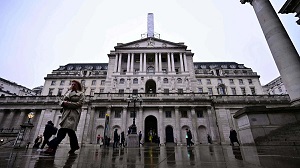
LONDON — Millions of Britons will see their mortgage payments climb, leaving them further exposed to economic shocks, the Bank of England warned Thursday, after raising its own borrowing costs to combat inflation.
While British households and businesses remain "resilient", according to a semi-annual report from the central bank's Financial Policy Committee, it said "successive interest-rate and cost shocks are reducing the capacity of some households to absorb further shocks".
Around 6.5 million British borrowers face higher monthly mortgage payments by the end of 2029, according to the report on financial stability.
Around 430,000 of them risk a monthly payment increase of more than £500 ($655).
The Bank of England hiked its benchmark interest rate this month by a quarter-point to 4.0 per cent, its first increase in more than three years.
Annual UK inflation sits at 3.6 per cent and is projected to rise further next year.
The mortgage warning came after Britain's energy regulator said Wednesday that electricity and gas suppliers to millions of households could raise a cap on bills by 26 per cent in January, as the Middle East and Russia-Ukraine wars impede supplies.
But BoE governor Andrew Bailey told a committee of British MPs on Wednesday that a peak inflation forecast for next year could be lower than feared after recent drops in oil and other energy prices.
The bank added in its report that concerns about the sustainability of sovereign debt are intensifying, while investors are questioning the future profitability of artificial intelligence companies.
The report also highlighted the risks posed by an increasing number of AI-related incidents, as well as the threat from quantum computing, which could potentially break existing encryption systems.
The institution warned against reliance on certain providers, noting that an incident could affect many companies simultaneously — as has been the case with Google Cloud and Microsoft.
The BoE proposed lowering capital requirements for large banks with operations concentrated in the UK, such as NatWest and Lloyds.
Previously, they were subject to stricter requirements than those with a more international focus, such as HSBC and Barclays.
Latest News
-
 Crown Prince attends Jordan-Ireland ICT Forum TechConnect
-
 Jordan, Uzbekistan issue joint statement following conclusion of talks between King, Uzbekistan president
-
 King, Uzbekistan president witness exchange of agreements, MoUs
-
 King, Queen receive Uzbekistan president, first lady at start of their state visit to Jordan
-
 Crown Prince meets with Enterprise Ireland executive directors