- Last Update24-Oct-2026


- Tweet
-
'Moderate' inflation, resilient growth support Jordan’s investment outlook —economists
The Jordan Times
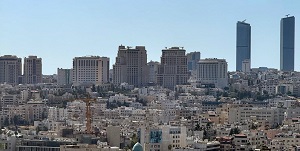
AMMAN — Jordan’s moderate inflation, continued economic growth and resilient export performance are supporting a stable investment environment despite regional uncertainty, economists told The Jordan Times, highlighting opportunities to strengthen the Kingdom’s competitiveness and attract further investment.
The International Monetary Fund (IMF) maintained its economic growth forecasts for Jordan at 2.7 per cent for 2026 and 3.1 per cent for 2027 in its October 2026 Regional Economic Outlook, reflecting the resilience of the Kingdom’s economy amid regional conflict.
Inflation averaged 2.26 per cent during the first nine months of 2026, while the year-on-year rate reached 2.73 per cent in September, according to Department of Statistics (DoS) figures released on October 12.
Former Jordanian minister of state for economic Yusuf Mansur, described the average inflation rate as reasonable, noting that it remained manageable alongside continued economic growth.
“Overall, an average inflation rate of 2.26 per cent is not a cause for concern, especially as the economy continues to grow and make progress.”
He said that the current inflation rate was unlikely to significantly affect Jordan’s attractiveness to European investors or tourists, although its effects could vary across economic sectors.
“The current inflation rate is unlikely to have a significant impact on European investors,” Mansur said, adding that the overall impact on investment and tourism was expected to be minimal.
Growth, trade reinforce economic resilience
Jordan’s economy expanded by 3 per cent in the second quarter of 2026, compared with 2.8 per cent in the same period of 2025, according to official figures.
The positive performance was also reflected in productive sectors and external trade.
A recent report by the Jordan Strategy Forum shows that manufacturing grew by 6.2 per cent in the second quarter, while agriculture expanded by 7.8 per cent.
Exports increased by 10.3 per cent to around JD6.4 billion during the first seven months of 2026, while imports rose by 2.4 per cent. The trade deficit narrowed by 6 per cent, and the export-to-import coverage ratio improved to 55 per cent from 51 per cent.
Investment in development zones increased by 18.8 per cent during the first half of the year to JD6.9 billion, while the combined profits of companies listed on the Amman Stock Exchange (ASE) rose by 14.3 per cent to JD1.2 billion.
These indicators provide a positive backdrop for the investment outlook, pointing to continued activity across productive sectors, improved export performance and stronger corporate profitability.
The IMF’s decision to maintain its growth projections for Jordan, despite downgrading its outlook for the wider Middle East, North Africa, Afghanistan and Pakistan region, further highlights the Kingdom’s relative resilience.
Competitiveness offers further opportunities
Raad AlTal, professor of economics at the University of Jordan, said that Jordan’s economic fundamentals and strategic advantages continued to offer opportunities to strengthen its investment appeal.
“Jordan has important advantages, including its strategic location, skilled workforce, and access to regional markets,” AlTal said.
He added that European investors valued stability, clear regulations and a predictable business environment when assessing investment opportunities.
AlTal, who is recently assigned as a Chairperson of the Board at ASE, identified housing rents, transport, food prices and imported goods as key factors influencing inflation, noting that higher rents and transport costs could increase operating expenses for companies.
DoS figures show that rents contributed 0.72 percentage points to average inflation during the first nine months of 2026, while transport contributed 0.66 percentage points.
However, AlTal said targeted measures to reduce these costs could strengthen the Kingdom’s competitiveness and encourage further investment.
He recommended reducing transport and logistics costs, expanding the supply of affordable housing and lowering energy costs through renewable energy.
He also called for simplifying investment procedures, reducing unnecessary regulations and improving access to finance.
“These measures would lower business costs, improve productivity, and encourage more domestic and foreign investment,” he said.
Moderate inflation outlook
Both economists expected inflation to remain manageable, although international oil prices and regional developments will continue to influence the outlook.
Mansur said that lower oil prices could reduce the cost of goods and services in the coming months if regional tensions eased and maritime routes remained open.
“If the Strait of Hormuz and Bab el-Mandeb remain open and the conflict in the Gulf subsides, oil prices are expected to fall,” he said.
AlTal projected inflation to remain moderate during the final quarter of 2026, provided there are no major increases in oil prices or significant regional disruptions.
He estimated that inflation could range between 2.5 and 3 per cent during the final quarter, with the annual average for 2026 reaching 2.3–2.5 per cent. He stressed that these were his estimates rather than official forecasts.
The IMF’s October World Economic Outlook projected average inflation of 2.5 per cent in Jordan in 2026, before easing to 2.3 per cent in 2027.
For Jordan, the combination of moderate inflation, continued economic growth and improving trade indicators provides a constructive basis for the investment outlook.
Maintaining price stability while improving productivity and reducing operating costs could help the Kingdom build on this resilience and translate economic progress into stronger investment and sustainable growth.
Latest News
-
 Jordan, Syria pledge to deepen strategic ties, condemn Israeli incursions
-
 Sisi says Egypt to 'defend Saudi territory' and will not attack Yemen
-
 Falling debris from intercepted drone targeting Saudi Arabia’s Shaybah oilfield kills two — ministry
-
 US envoys Witkoff, Kushner to take part in Ukraine talks in Oslo — Norway
-
 UK to deploy fighter jets to help protect Saudi from Houthi attacks - govt