- Last Update11-Nov-2026


- Tweet
-
On the occasion of the conference of scientific and space attachés and agricultural experts - By Antonio Tajani, The Jordan Times
Scientific diplomacy is now a fundamental pillar of growth diplomacy. Science is a major driving force behind competitiveness and economic growth. Artificial intelligence, robotics and digitalisation are transforming industry, and Italy must play a leading role in these transformations. Through our scientific attachés, we are turning our embassies into advanced centres promoting Italian research around the world. This is why I have decided to invest increasingly in this network, which we are working to expand across all continents.
Exports are a source of pride for our economy. Last year, we reached a record figure of €643 billion. This year, we are growing at an even faster rate, at approximately 6%. Our goal is to reach €700 billion by 2027, and scientific diplomacy can make a significant contribution towards achieving this objective.
Italian researchers around the world, who are true ambassadors of Italy's scientific heritage abroad, will play a pivotal role. I am particularly pleased to announce the establishment of a Confederation of Associations of Italian Researchers Worldwide. By bringing this extraordinary wealth of talent together within a single network, Italy will become more influential and more advanced.
Our objective is both straightforward and ambitious: to continue strengthening the great team working to internationalise Italian research. Our scientific diplomacy must increasingly place innovation and support for start-ups at the heart of its activities. In the field of advanced technologies, I am thinking of the important work we are doing in artificial intelligence, a priority that we are promoting within the G7, the G20, the United Nations and our relations with international partners, while always keeping people at the centre.
At the Ministry of Foreign Affairs, we have launched three working groups dedicated to the internationalisation of strategic sectors: biotechnology and life sciences; cybersecurity and artificial intelligence; and quantum technologies. At the Export Conference dedicated to Southern Italy, held in Bari on 16 June, we launched a start-up laboratory. We are strengthening our commitment across all strategic sectors.
Space is a vital field and essential to the competitiveness of Italy and Europe. I emphasised this at the General Assembly of the Space Economy, which I hosted on Monday at the headquarters of the Ministry of Foreign Affairs.
I am also thinking of our major commitment to critical raw materials and securing supplies of everything our industry needs. For the first time, Italy now has a genuine foreign policy strategy on raw materials, and we have also raised this issue at the European level.
Food security and support for our agricultural sector are also among our key priorities. Agricultural experts can play a decisive role in supporting our export plan and diversification strategy. Expanding access to foreign markets is of strategic importance for our exports.
International partnerships will become increasingly central to our efforts. We will continue to rely on our traditional partners, such as Europe and the United States, but we must also pursue diversification in this field.
Above all, I am thinking of the wider Mediterranean region, which, in my vision, extends to the Gulf, India and beyond, as well as Africa, which is a priority for the government. The government is committed to making this vast region an increasingly important area of stability, dialogue and growth. There are numerous areas for cooperation, including precision agriculture, renewable energy, climate change, water resources and space.
Italy's commitment to strengthening ties between Europe and the Mediterranean region is part of this strategy. We are at the forefront of efforts to advance the major IMEC (India-Middle East-Europe Economic Corridor), a strategic initiative that will connect Europe with major Asian markets.
This is not simply about ports and infrastructure. In our vision, the corridor is also a major channel for science, knowledge and innovation. We are making our outstanding resources available, including our ports of Trieste and Gioia Tauro, as well as our research centres.
We are therefore particularly pleased with the decision by UNESCO Director-General Khaled El Enany to transform Trieste into a global scientific hub.
To make Italy stronger and better prepared for the challenges of the future, a major collective effort involving institutions, businesses and regional authorities is essential.
Antonio Tajani is Deputy Prime Minister of Italy and Minister of Foreign Affairs
Latest News
-
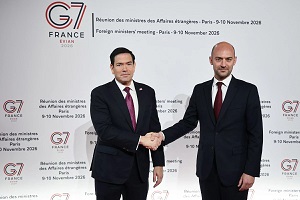 Rubio says progress made on 'security infrastructure' after Ukraine war
-
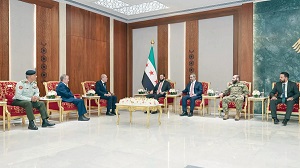 Syria’s Al Sharaa receives high-profile Jordanian delegation, underlines deep Damascus-Amman ties
-
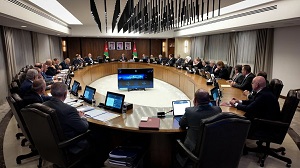 Cabinet approves tougher anti-terrorism measures, introduces harsher penalties
-
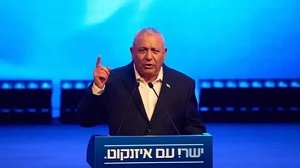 Herzog Tasks Gadi Eisenkot With Forming New Government
-
 US military offers $20 million reward for information on ‘Iran’s nuclear program’