- Last Update23-Sep-2026


- Tweet
-
Germany, Netherlands highlight fintech role in MSME growth, financial inclusion
AFP
DEAD SEA — Germany and The Netherlands have reaffirmed their support for Jordan’s fintech ecosystem, highlighting financial technology as a tool to expand access to finance, support micro, small and medium-sized enterprises (MSMEs), advance green investment and connect Jordanian companies with international markets.
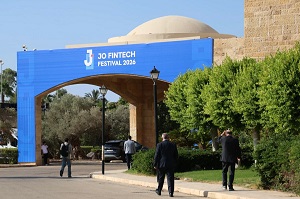
The two countries are partners in the Jordan FinTech Festival 2026, organised by the Central Bank of Jordan (CBJ), with their ambassadors stressing the importance of cooperation between regulators, financial institutions, fintech companies, investors and development partners in turning innovation into practical economic opportunities.
In statement to The Jordan Times, the German Ambassador to Jordan Bertram von Moltke said that financial innovation can help address a major challenge facing Jordanian MSMEs, which account for more than 99 per cent of businesses and around 70 per cent of private-sector employment, but receive only around 10 per cent of lending by banks and microfinance institutions.
“Financial innovation can help close that gap by making it easier and more efficient for small businesses to access finance, manage cash flow and invest in their growth,” the ambassador said.
The ambassador stressed that the focus should be on the economic impact of technology.
“For Germany, the important point is not technology for technology’s sake. It is whether innovation helps businesses invest, grow and create jobs,” the ambassador said, adding that financial inclusion and innovation are an important part of Germany’s wider economic cooperation with Jordan.
Germany supports financial inclusion and green finance through the GIZ-implemented Innovative Approaches for the Financial Inclusion of MSMEs (I-FIN) project, implemented in close cooperation with the CBJ and co-financed by the Netherlands.
The German ambassador said meaningful progress should be reflected in greater use of appropriate financial services, a narrower gender gap and increased access to investment finance for MSMEs.
During the previous phase of I-FIN, 29 financial products were developed or adapted, while more than 7,700 MSMEs accessed innovative financial services worth €63.9 million. The financing was associated with 1,511 new jobs, including 472 for women.
The next phase will continue supporting an enabling environment for inclusive and green finance, work with financial institutions on services tailored to MSME needs, and help businesses prepare viable green investments.
“For us, meaningful progress is when good policy translates into financing that businesses can actually access and use,” the ambassador said.
The ambassador also highlighted Germany’s support to the CBJ in advancing financial sector reforms and the JoReg-Box regulatory sandbox, which allows innovative financial solutions to be tested in a controlled environment.
Examples cited include Credit Plus’ supply-chain financing solution, developed with major Jordanian banks, and eDamana’s digital bank-guarantee platform, which several banks are using or testing.
The German ambassador said that the Jordan FinTech Festival provides an opportunity to bring regulators, banks, fintech companies, investors and development partners together, with stakeholders from more than 30 countries discussing artificial intelligence, open finance, cross-border payments, cybersecurity and green finance.
“Germany brings experience in financial innovation, regulation and sustainable finance; Jordan brings talent, entrepreneurship and regional reach,” the ambassador said.
“The real value of a Festival like this is what happens afterwards: turning dialogue into partnerships, investment and economic opportunity.”
The Dutch Chargé d’affaires Herman Quarles van Ufford said that private-sector development is a cornerstone of The Netherlands’ development programme in Jordan over the next four years, with fintech playing an important role in helping MSMEs grow, trade, attract investment and access international markets.
“MSMEs in Jordan are the largest drivers of economic growth and employ approximately 60 per cent of Jordan’s workforce, so it is key to help them reach their full potential,” the ambassador said.
Through cooperation, including I-FIN, the Netherlands aims to bring government, regulators, financial institutions and the private sector together to create an environment where responsible innovation can deliver benefits for entrepreneurs and the wider economy.
The diplomat also highlighted the connection between financial inclusion and green finance, saying smaller and women-led businesses should be able to access finance for investment in energy efficiency, water-saving technologies and sustainable business models.
“This is especially relevant in Jordan, where water scarcity and climate pressures directly affect businesses,” he said.
Through I-FIN, Dutch cooperation also supports ‘blue’ finance focused on clean water and water efficiency, linking access to finance with Jordan’s transition towards a greener and more resource-efficient economy.
Beyond funding, the Netherlands is seeking to strengthen links between Jordanian fintech companies and international markets.
The Dutch envoy highlighted a trade mission earlier this year that brought 11 Jordanian fintech companies to The Netherlands, where they connected with the Dutch and wider European ecosystem.
The companies also attended Money20/20 in Amsterdam, exploring opportunities for investment, partnerships and international expansion.
He said that future cooperation could include trade missions, business-to-business exchanges, accelerator partnerships and regulatory exchanges, giving Jordanian fintech companies access to potential clients, investors, partners and expertise in the Netherlands and wider European market.
The upcoming EU-Jordan Investment Forum will provide another platform for Jordanian companies to connect with European investors, the ambassador said.
Latest News
-
 Safadi urges international community to act on Gaza humanitarian crisis
-
 Gov’t says Lebanon gas supplies await infrastructure readiness
-
 Prime minister unveils plans to boost economy in Maan, accelerate development
-
 CBJ raises interest rates by 25 basis points
-
 King begins working visit to New York for UN General Assembly