- Last Update23-Nov-2026


- Tweet
-
The strategic thinking behind the Crown Prince’s message to the world - By Shaker Aladwan, The Jordan Times
As always, His Royal Highness Crown Prince Hussein demonstrates a brilliant vision for the future. This was no ordinary, protocol-driven interview; rather, it served as a profound investment and political message. It addressed key business communities and major markets—such as the European market—while also reaching the audience of CNN and global, transnational corporations. The timing of the interview is significant, conveying clear messages to both the world and the region. Upon closer examination, it is evident that Crown Prince Hussein sought to deliver five strategic messages.
The first is that Jordan has transitioned from a phase of resilience to a phase of prosperity—a qualitative shift in both the psychological and political spheres. Despite its challenging geopolitical location, Jordan remains stable. In this regard, I quote His Royal Highness: "Despite the significant challenges Jordan has faced over the past decades, our economy is moving in the right direction." The Crown Prince did not merely list these challenges in a conventional manner; instead, he acknowledged them as a step toward overcoming them. This is an effective communication technique: acknowledging a problem lends significant credibility to the process of finding solutions.
The second message that the Crown Prince sought to convey centers on the transition from mere resilience to prosperity. In the Prince’s view, ambition is not limited to holding firm; it extends to achieving prosperity—a goal for which he believes the time has now come. For several years, official Jordanian discourse focused on reinforcing the concepts of resilience and adaptability, emphasizing the nation’s capacity to withstand challenges. It now appears, however, that this official discourse has evolved to become more astute and sophisticated, reflecting a deliberate shift in the Jordanian narrative. The phase of resilience has run its course; the time for growth and prosperity has arrived. In the context of the investment climate, this shift is highly significant: investors are not merely seeking a state that has mastered the art of defense and resilience—they are looking for a state with a proactive strategy for growth, expansion, and prosperity.
The third message focused on the language of figures—a metric that commands greater confidence in the worlds of business and investment. The projected growth rate of 2.7% to 3% is notable, especially given the decline in tourism—a key pillar of the Jordanian economy and a primary driver under the Economic Modernization Vision—as well as the state of war that has gripped the Arab region since 2023. Furthermore, the Crown Prince highlighted the value of the National Water Carrier project, which stands at approximately 6 billion US dollars. The first figure underscores the resilience of the Jordanian economy, while the second signals a transition from large-scale investments to truly massive, tangible projects—moving beyond mere promises. Given that Jordan ranks among the ten most water-scarce nations in the world, this initiative effectively transforms a fundamental vulnerability into an opportunity for development and investment.
The fourth message emphasized by His Royal Highness the Crown Prince is that Jordan serves as a robust alternative within new supply chains. While the interviewer, Richard Quest, alluded to the search for alternatives to the Strait of Hormuz—such as establishing secure corridors, new ports, and routes for trade, navigation, and the transport of goods—the Crown Prince did not comment directly on the geopolitical situation or the U.S.-Iran conflict. Instead, he presented Jordan as a secure and stable alternative. This was a shrewd approach; it conveyed the message—without delving into the complexities of sensitive political issues—that should there be any concerns, Jordan stands ready as a safe corridor, backed by strong institutions and a solid, stable financial and banking sector.
The fifth message lies at the very core of the Jordanian reality: His Royal Highness underscored that human capital is the nation’s true competitive advantage. Jordanian minds and talents are our most valuable asset; whenever given the opportunity, Jordanians consistently demonstrate their excellence. The Crown Prince called for investment in the Jordanian people—equipping them with the necessary skills and knowledge, and ensuring they keep pace with the latest advancements in technology and emerging fields, most notably artificial intelligence. Jordan may lack a massive domestic market or vast oil reserves, but it possesses a well-educated population. In this context, the Crown Prince highlighted a vital triad—education, the economy, and investment in youth—a vision long championed by both His Majesty King Abdullah and Crown Prince Hussein.
The Crown Prince delivered a balanced and thoughtful address—devoid of empty slogans—that conveyed a sense of reassurance and stability, steering clear of mere fervor or the rehashing of past crises. He emphasized that peace is not merely an ethical or humanitarian value, but an economic asset that can be leveraged for Jordan’s future; in essence, he signaled that having invested in peace, the time has now come to reap the rewards.
The writer is former deputy chief of Petra Development and Tourism Region Authority
Latest News
-
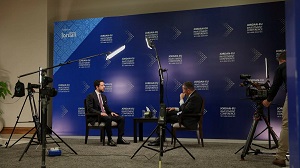 Crown Prince to CNN: Investment conference a major milestone in Jordan-EU relations
-
 Trump, Xi and Putin's Pledge to Boost Refined Oil Product Supplies Faces Implementation Hurdles
-
 Gulf nations on alert after US strikes Iranian island
-
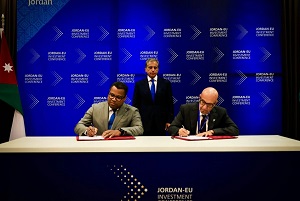 Prime minister attends signing of $6.6 billion Water Carrier Project agreement
-
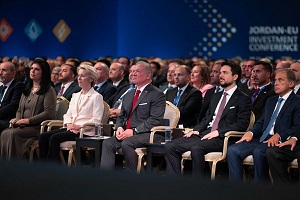 King at Jordan-EU Investment Conference: Jordan is ready for investors