- Last Update28-Aug-2026


- Tweet
-
Syria President Appoints Kurdish Leader Mazloum Abdi as His Adviser
Asharq Al-Awsat
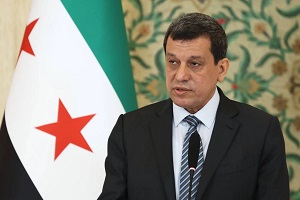
Syrian President Ahmed al-Sharaa appointed Kurdish leader Mazloum Abdi as a presidential adviser, state media said on Friday, days after Abdi announced the dissolution of his Kurdish forces under an integration deal with Damascus.
"Mustafa Khalil Abdi is appointed as adviser to the presidency of the republic," announced the decree, signed by Sharaa and published by state news agency SANA.
Abdi, who has been known by several different names, was for years the leader of the Kurdish-led Syrian Democratic Forces (SDF), the Washington-backed group at the forefront of the battle against the ISIS group.
On Tuesday, he announced the SDF's dissolution, part of a deal he made with Sharaa in January to integrate the Kurds' forces and civilian administration into the state.
Syria's new authorities who toppled longtime ruler Bashar al-Assad in December 2024 have been seeking to extend state control across the whole country.
The integration deal was a major victory for Sharaa, but an end to long-held Kurdish hopes for autonomy.
US special envoy to Syria Tom Barrack said on Tuesday that "this is what real integration looks like... former counterparts with differing points of view crafting a diplomatic solution to strengthen the sovereign nation of Syria".
"Securing substantive roles for our valued partners" including Abdi within the government "pays due respect to their leadership, the sacrifices of our Kurdish partners, and the constructive contribution they have made to regional stability", Barrack added, without indicating what role Abdi was to have.
Abdi said Tuesday that the SDF's dissolution followed "the completion of the process of integrating our forces into the brigades of the Syrian army".
The SDF was formed in 2015 at the instigation of the United States, which was impressed by the Kurdish fighters who had defeated ISIS in Kobane in the north and was seeking a reliable partner in the ongoing battle against the extremists.
It was the de facto army of the semi-autonomous administration which the Kurds set up in north and northeast Syria after seizing territory battling ISIS during Syria's civil war.
But Abdi signed up to the integration deal following clashes this January that saw the Kurds lose swathes of territory to government troops, and as the Kurds' longtime backer Washington drew close to the new authorities in Damascus.
During the violence, Sharaa signed a decree enshrining the Kurds' national rights and recognizing Kurdish as a national language -- an unprecedented step since Syria's independence in 1946.
Last week, Abdi announced that the integration of the Kurdish administration with the Syrian state was complete, adding: "Our struggle will continue, to cement our people's rights in the constitution."
From joining the Kurdistan Workers' Party (PKK) in 1990 through to announcing the dissolution of the SDF, Abdi has amassed significant influence among Syria's Kurds.
Born in northern Syria's Kobane area near the Turkish border in 1967, Abdi was for years seen in fatigues -- a modest, mildly spoken but savvy military leader, more comfortable in his native Kurdish than Arabic.
Nanar Hawach, Syria analyst at the International Crisis Group, said Abdi was among "PKK veterans" who established the People's Protection Units, or YPG, in Syria, in an announcement that came after the civil war erupted in 2011.
The PKK, considered a "terrorist" group by Türkiye and its Western allies, waged a deadly insurgency against Ankara for decades before last year formally renouncing its armed struggle.
Abdi rose to prominence in Syria during the battle for Kobane, now symbolic for the Kurds after their 2015 victory there over ISIS following months of fierce battles.
During the civil war, Abdi maintained a careful balancing act between various sides including Washington, an ally of Türkiye, which launched cross-border offensives targeting Syrian Kurdish fighters it views as PKK offshoots.
Abdi also held cautious ties with the Assad government, which accused the Kurds of "separatism", and with its ally Russia.
After Assad's ouster, Abdi showed openness to the new authorities and started negotiations as the balance of power shifted and as Western powers including Washington moved to support Sharaa.
Abdi, who studied engineering in Aleppo, was reportedly close to the PKK's now-jailed founder Abdullah Ocalan and took part in clashes inside Türkiye, leading to his arrest in Syria under Hafez al-Assad in the 1990s.
Abdi has said he later went to Europe then to Iraq, where the PKK long had its rear base in the country's north.
He was identified in the presidential decree as Mustafa Khalil Abdi, and has been known by other names including Ferhat Abdi Sahin and Mazloum Kobane.
He is on Türkiye’s list of "wanted terrorists" with a bounty on his head and an Interpol red notice out for him.
Latest News
-
 Astana Congress calls for stronger interfaith dialogue, global peace
-
 Jordan welcomes US decision to remove Syria from terrorism sponsor list
-
 Trump claims Iran 'collapsing' as US threatens 'economic D-Day'
-
 Crown Prince attends ceremony marking anniversary of Prophet’s birth
-
 King, China president witness signing of agreements, MoUs